


Onomatopoeic Sculptures

CHUUU: The squeaks of mice below the floor

BIRIBIRIBIRIRIRI: The sound of electricity
"Artist Atsushi Fukunaga gives shape to Japanese giongo (onomatopoeia) in playful sculptures that have the zing of manga sound-effect graphics gone 3D."
Via pink tentacle.
Hugh Ferriss
|
Labels:
architecture,
design


From Wiki-p:
"Ferriss was trained as an architect at Washington University in his native St. Louis, Missouri, but, early in his career, began to specialize in creating architectural renderings for other architects' work rather than designing buildings himself. As a delineator, his task was to create a perspective drawing of a building or project. This was done either as part of the sales process for a project, or, more commonly, to advertise or promote the project to a wider audience. Thus, his drawings frequently were destined for annual shows or advertisements. As a result of this his works were often published (rather than just given to the architect’s client) and Ferriss acquired a reputation. After he had set up as a free-lance artist he found himself much sought after."
Kosmograd has gone and posted 300+ of his renderings on flickr.
Thank you kosmograd.
Kosmograd has gone and posted 300+ of his renderings on flickr.
Thank you kosmograd.


Fire Whirls
"A fire whirl is a phenomenon in which a fire, under certain conditions (depending on air temperature and currents), acquires a vertical vorticity and forms a whirl, or a tornado-like effect of a vertically oriented rotating column of air. "
This one during daytime:

Gianni Mangoma
Interesting concept: trying to scare the living daylights out of your musician. Great music and coreography though.
Video found at Matsuli Music.
Porpita Porpita
|
Labels:
nature,
opticasens,
wunderkammer

"Porpita porpita has a small disc like body and floats freely in the water column. Related to the jellyfish, this species measures just one inch in diameter." "It isn't even a single organism, but a colony! The central disc is reinforced with a chitin-like material and is chambered in cross-section; filled with gas, it keeps Porpita afloat, for these are pelagic creatures. The "tentacles" of Porpita are in fact individual zooids, each of which is specialized for a particular function, such as digestion, prey capture, or reproduction." Link.

BibliOdyssey Raid
|
Labels:
carrousel,
opticasens
I have about a million BibliOdyssey posts saved up for re-posting. It's about time I made a clear-up. So here are a bunch of random images from quite probably the best visual blog on the net. If you want to find out the story behind them, you'll just have to lurk. Which is just as well, because you are only bound to find even more impressive stuff.
I hope peacay doesn't mind.


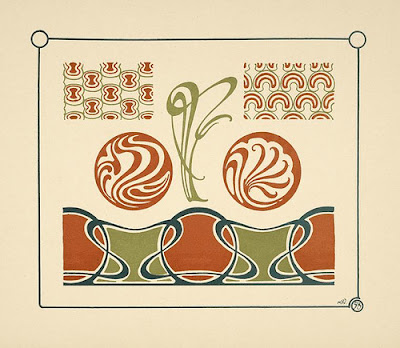

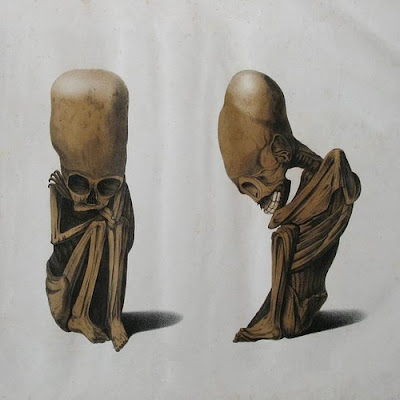


BibliOdyssey
I hope peacay doesn't mind.


BibliOdyssey

The Haka
|
Labels:
video
This post is divided in two.
First up: The Cool Haka.
Next up: The shit Haka.
Et c'est fini.
First up: The Cool Haka.
Next up: The shit Haka.
Et c'est fini.


Michael Schnabel
|
Labels:
photography,
project


Took me a while to realise what I was looking at here. Liking this.
Link to Michael Schnabel's gallery.
via moon river
The Wave - (Part Three)

"The Morning Glory cloud - considered one of the world's most exotic meteorological phenomena - is best known from the Gulf of Carpentaria, northern Australia, where it is observed most often during spring, usually near dawn. The name "Morning Glory" reflects the often spectacular appearance of the long horizontal clouds at sunrise. . A Morning Glory cloud is a roll cloud that can be up to 1000 kilometers long, 1 to 2 kilometers high, and can move at speeds up to 40 kilometers per hour. "
Morning glory clouds have also been documented elsewhere, like the following in Sable Island, Canada, which, funnily enough, is itself shaped like a wave:


"Morning Glory, Sable Island, June 13, 2003. As the cloud approached, its position relative to the island was indicated by the long narrow shadow cast across the landscape, between the north and south beaches."

"View of the Morning Glory, looking towards the north, before and after it passed overhead. The front of the cloud was very smooth..."

"... the back was somewhat turbulent. The cloud was followed by a single line of scattered irregular cumulus."

"As the Morning Glory passed overhead, there was a drop in temperature, and a dramatic wind shift. This is a view to the north. looking along the underside of the cloud."

"The back of the cloud as it traveled westward. The laser ceilometer at the station measured the base of the cloud at 150 meters. The distance between the base of the cloud and its shadow on the ground indicated that the cloud itself must have had a depth of roughly 300 to 400 meters."
Gliding over one of these rare atmospheric phenomena must be incredible.Thanks to Leno for introducing me to this.
Previously:
The Wave (Part One)
The Wave (Part Two)
Subscribe to:
Posts (Atom)