Link.




While it's technically true to categorize the cyanotype (blueprint or photogram) as a form of photography, it seems to straddle the fence with printmaking although this may just be semantics.In 1841 or so, Sir John Herschel disovered the sensitivity to light of a particular iron solution. When this chemical is dissolved in water, it can be applied to a surface such as paper and an object is placed on top and during exposure to uv light, the background goes blue ('Prussian blue') and a negative image of the object remains. Simple and cheap and still practised today by artists and school children.
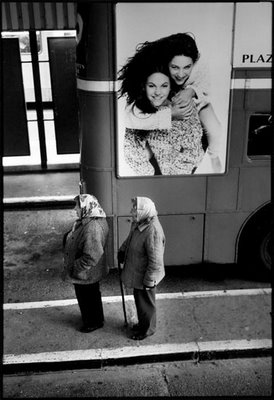
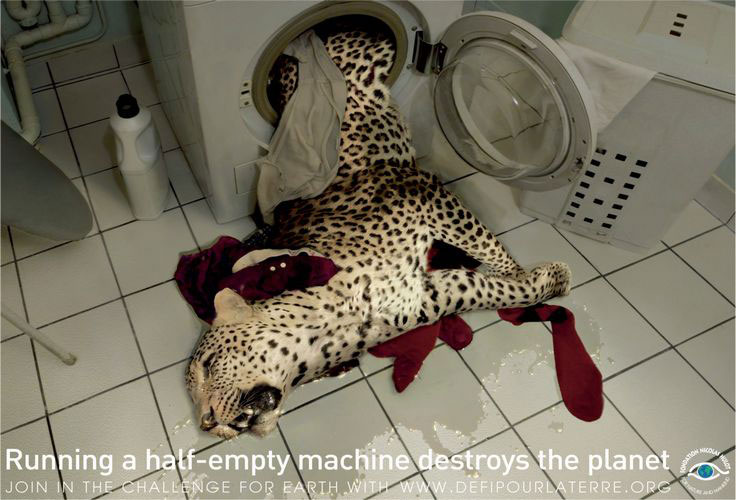 I blame a lot of things on the corporatisation of life and PR and advertising. I especially despise advertising. I could go on and on about my reasons, but I doubt anyone would be too interested; plus there has been enough written about it by much more knowledgeable people than me. But then, I see things like these campaigns, and my mind gets all confused.
Then Bioy Casares recalled that one of the heresiarchs of Uqbar had declared that mirrors and copulation are abominable, because they increase the number or men.

Shared by photopath
Ahhh... much better...
 Shared by amaw
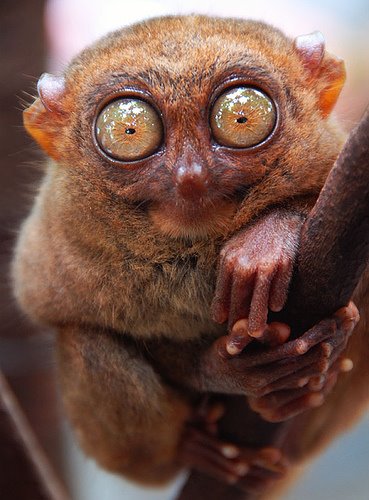 Shared by Flipped Out
Haha!
I'm in a good mood today for some reason...
Anyways, i think I've found my new favourite animal (sorry, cow). This is the Tarsier, a teeny teeny primate found only in remote islands of the Philipines.
I don't know much about them, other than they don't like it when you try to touch them. That expression is priceless!
God they're brilliant!
The eccentric Southern tradition of "eephing" is best described as the hillbilly equivalent of the hip-hop human "beat box" vocal style -- a kind of hiccupping, rhythmic wheeze that started in rural Tennessee more than 100 years ago.
Just like human beat-box artists of the 1980s rendered perfect imitations of drum machines with their mouths, the original eephers of the 1880s imitated the hogs and turkeys living in their backyards.



"Gilles Trehin is an autistic 28-year-old. Since the age of 12, he has been designing an imaginary city called Urville, named after the “Dumont d’Urville,” a French scientific base in Antarctica. He has created detailed historical, geographical, cultural, and economic descriptions of the city, as well as an absolutely extraordinary set of drawings. His Guidebook to Urville will be published later this year."
The real fear is the mentality of so many people lately- the rift that seems to have worked it’s way through the very heart of the country, dividing people. It’s disheartening to talk to acquaintances- sophisticated, civilized people- and hear how Sunnis are like this, and Shia are like that… To watch people pick up their things to move to “Sunni neighborhoods” or “Shia neighborhoods”. How did this happen?
I read constantly analyses mostly written by foreigners or Iraqis who’ve been abroad for decades talking about how there was always a divide between Sunnis and Shia in Iraq (which, ironically, only becomes apparent when you're not actually living amongst Iraqis they claim)… but how under a dictator, nobody saw it or nobody wanted to see it. That is simply not true- if there was a divide, it was between the fanatics on both ends. The extreme Shia and extreme Sunnis. Most people simply didn’t go around making friends or socializing with neighbors based on their sect. People didn't care- you could ask that question, but everyone would look at you like you were silly and rude.